"Can you build me a website for R500?" We hear it a lot — and yes, technically, you can get a website for a few hundred rand in South Africa. The real question is what you get for it, and what it quietly costs you later.
Cheap and affordable aren't the same thing. This is an honest look at what the bottom end of the market actually gives you, where the hidden costs hide, and what "affordable done right" really means for a small business.
The short answer
You can get online from around R500 once-off or R199 a month, but that buys a bare, templated site with little SEO, no real support, and no ownership. For an affordable site that actually works — fast, mobile, found on Google, and yours — the sensible floor is R5,000 to R10,000. The trick isn't spending the least; it's spending enough on the things customers actually feel.
What R500 actually gets you
At the very bottom of the South African market you'll find a few options:
| The cheap option | Rough cost | The catch |
|---|---|---|
| DIY builder (Wix, Squarespace, etc.) | from ~R120–R250 / month | You build it; template look; you don't own or export it |
| "Website + hosting" subscription | from ~R199 / month | Usually one templated page; stop paying and it goes away |
| Budget once-off (junior / template) | from ~R500–R600 | One page, minimal design, often no support after payment |
For that price you get a functional online presence — your name, a few sections, a contact form. What you give up is the part that makes a website work: custom design, real on-page SEO, more than a page or two, and someone to call when it breaks. Most bottom-tier sites are cookie-cutter templates with your logo dropped in.
The hidden costs of "cheap"
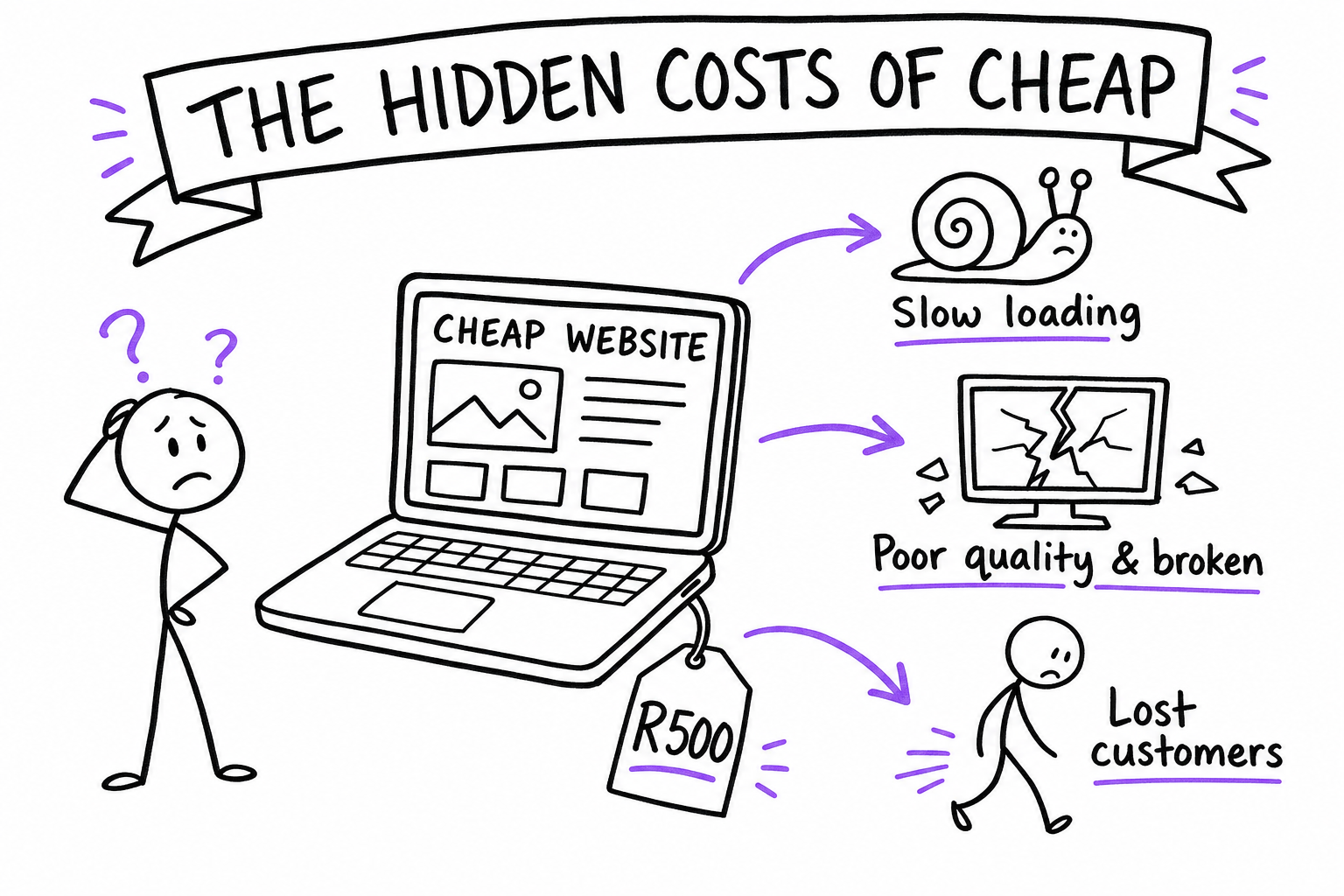
The sticker price is low. The real bill shows up later:
- Slow on phones. Research shows roughly half of mobile visitors leave a site that takes more than three seconds to load — so a slow, un-optimised site loses most of your traffic before they see it.
- Invisible on Google. Bargain sites usually skip proper SEO, so you stay hidden in search — fewer leads, quietly, forever.
- You don't own it. On many cheap builders you can't export your site, and some discount designers register your domain in their name. Leave, and you may start from scratch.
- No support, no backups. Plenty of cut-price providers vanish after the final payment. If the site breaks or gets hacked, recovery costs far more than you saved.
- You rebuild within a year or two. A flimsy site can't grow with you, so you pay again to have it done properly — more in total than doing it right once.
The South African catches
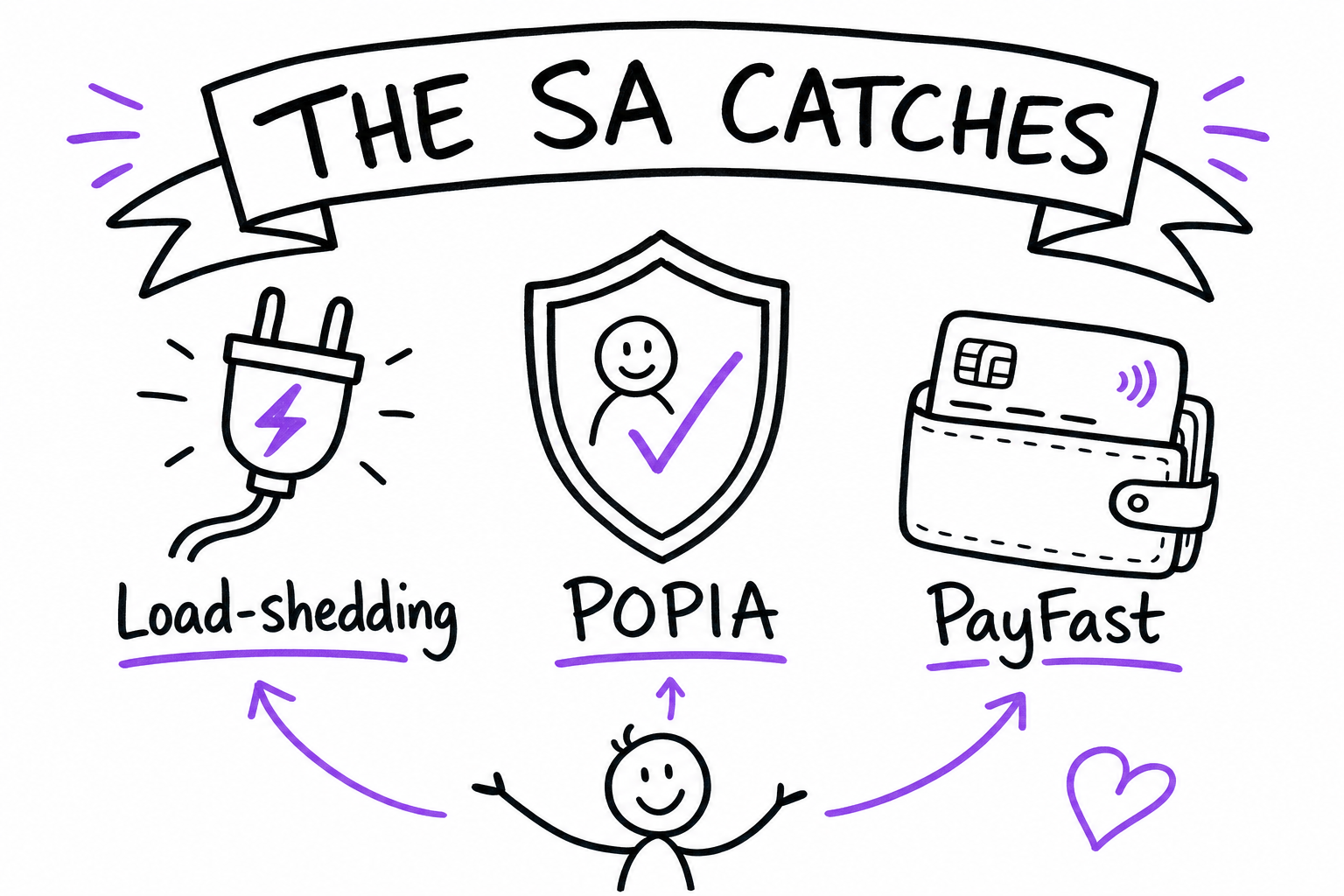
A few things matter more here than elsewhere:
- Load-shedding and uptime. A cheap host with no backup power can drop your site for hours during outages. Pick a host with generators and a real uptime guarantee.
- Local hosting and speed. Many bargain builders host overseas, which is slower for SA visitors. A locally hosted site loads faster for your local customers.
- POPIA. Even a contact form collects personal info, so you need an SSL certificate (HTTPS), a privacy policy, and consent on forms. Cheap sites often skip this — and the fines aren't cheap.
- Local payments. If you'll sell online, you need SA gateways like PayFast. Some platforms handle this well (more in how Shopify works in South Africa); the cheapest options often don't support local payments at all.
What "affordable done right" looks like
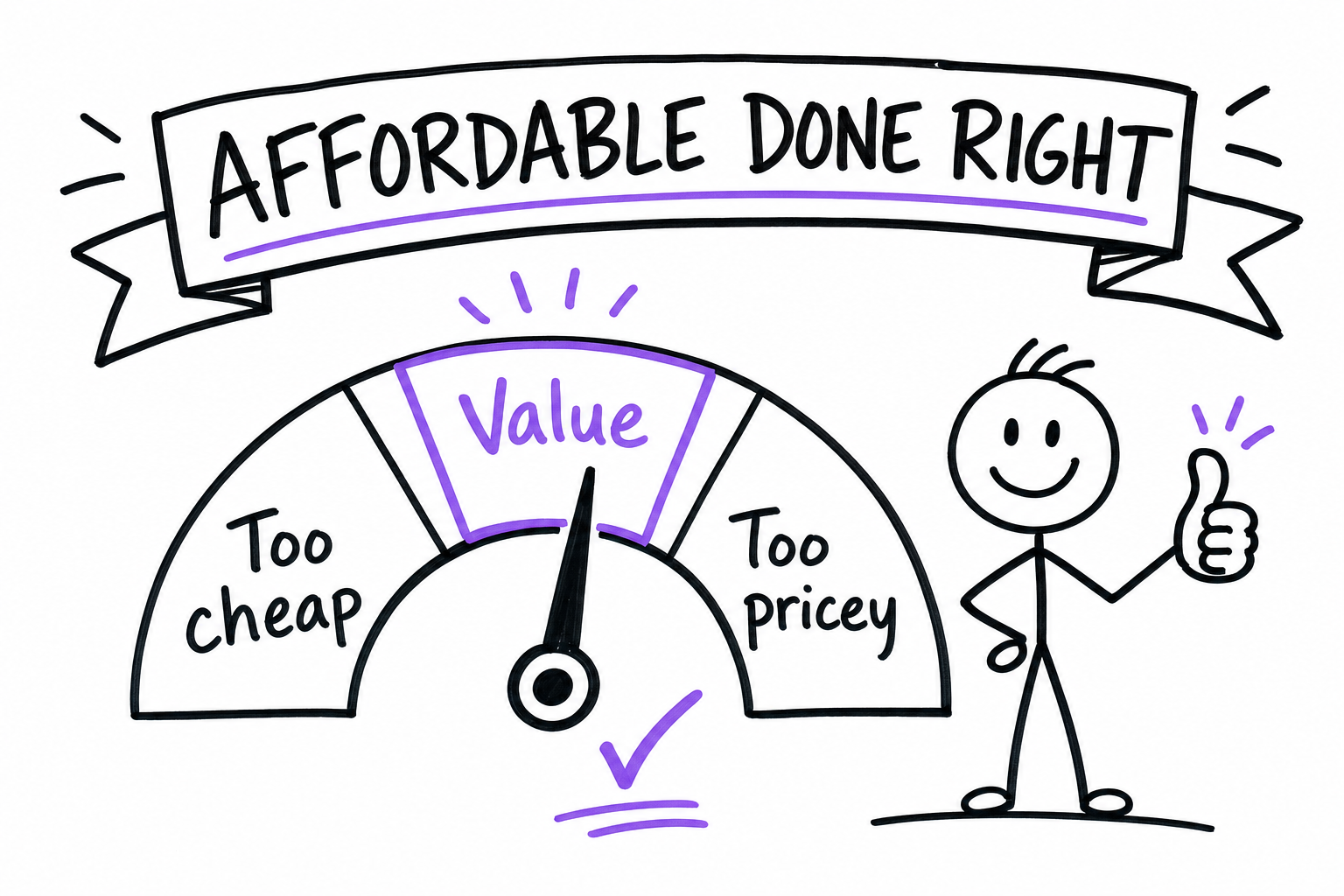
Affordable doesn't mean cheapest — it means paying enough to cover the fundamentals and nothing for fluff. For a standard small-business site, that sensible floor sits around R5,000 to R10,000 once-off, plus a little each month for hosting and email.
At that level you should get a custom-leaning design, a mobile-fast build, basic SEO so you can be found, an SSL certificate, and proper handover so you own your domain, your site and your content. It's the difference between a site that just exists and one that actually brings in enquiries.
(Want the full price breakdown by who builds it? See our guide on how much a 5-page website costs in South Africa, and remember getting found is a separate budget line — what SEO costs.)
How to spot good value vs a false economy
Before you pay anyone, ask these. The clearer the answers, the safer the deal:
- What's included? Pages, features, domain, hosting, email, and how many revisions — in writing.
- What's the timeline and process? A real delivery date, and how extra changes are billed.
- Can I see your work? Live sites for real clients, not just demo templates.
- Who owns the domain and site? It must be registered in your name, with full admin access for you.
- Is it built for mobile, SEO and security? Responsive, basic SEO, SSL — they should explain how.
- What support do I get after launch? A fix window or an affordable maintenance plan, plus any ongoing costs spelled out.
Evasive answers, no portfolio, no contract, or "guaranteed #1 on Google in a week" — that's when a low price stops being a bargain.
Want affordable web design that's actually built right?
We build fast, mobile, SEO-ready websites for South African small businesses — at a fair price, and you own everything. Start with a free quote.
Frequently asked questions
How much is an affordable website in South Africa?
You can start from about R500 once-off or R199/month, but a site that's actually fast, mobile and found on Google starts around R5,000–R10,000 once-off. Below that you usually trade away SEO, support and ownership.
Is a cheap website worth it?
Only if your needs are tiny. Most cheap sites are slow, hard to find on Google, and not yours to keep — and many businesses end up rebuilding within a year, spending more overall.
What should an affordable website include?
A custom-leaning, mobile-fast design, basic SEO, an SSL certificate, and proper handover so you own your domain, site and content.
Do I really own a website I paid for?
You should — but only if the domain is registered in your name and you get admin access. Always confirm this before paying.