Right now, someone near your business is typing "plumber near me," "coffee shop in Sea Point," or "hair salon Durban North" into Google. The question is simple: when they do, does your business show up — or does your competitor?
That's what local SEO is about. It's the work that gets you found by nearby customers at the exact moment they're looking to buy, call or visit. And for a small business, it's the most affordable, highest-return corner of SEO there is — you're not trying to rank against the whole country, just to win your own patch.
Here's how it works, what actually moves the needle, and where to start.
What local SEO actually is
Most search engine optimisation is about ranking your website. Local SEO is about ranking your business — on Google Maps, in the "map pack" you see at the top of local results, and in "near me" searches.
It leans on three things working together: your Google Business Profile (the free listing that powers your Maps presence), your reviews, and a website that backs them up. Get those right and you show up where local buyers are actually looking.
How Google decides who shows up
Google is unusually open about this. Its own Business Profile help says local results are ranked on three factors:
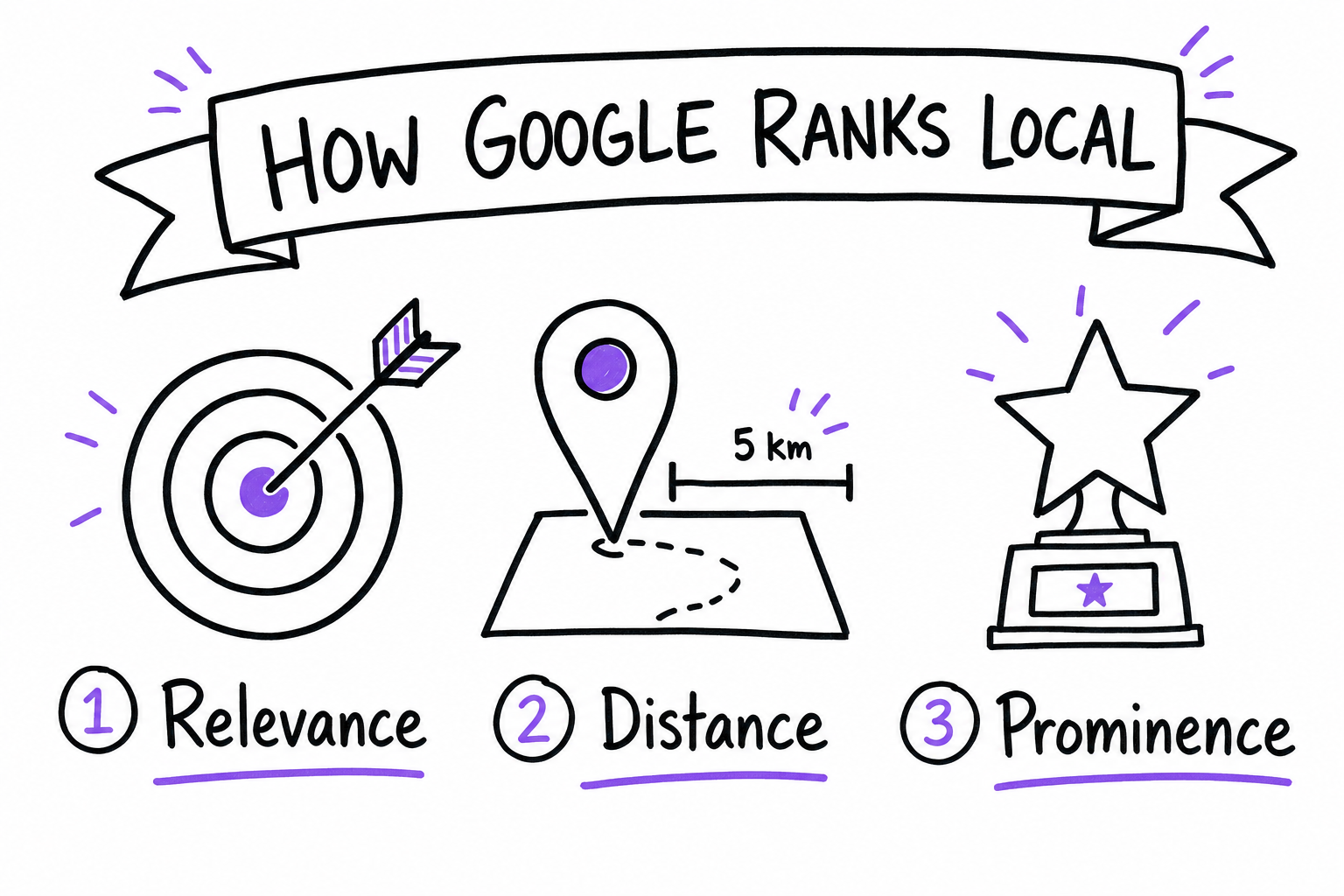
- Relevance — how well your business matches what someone searched for.
- Distance — how close you are to the person searching.
- Prominence — how well-known and established your business is (reviews and your web presence feed into this).
You can't change your customer's distance, but you have a lot of control over relevance and prominence — and that's exactly where local SEO does its work.
Your Google Business Profile is the foundation
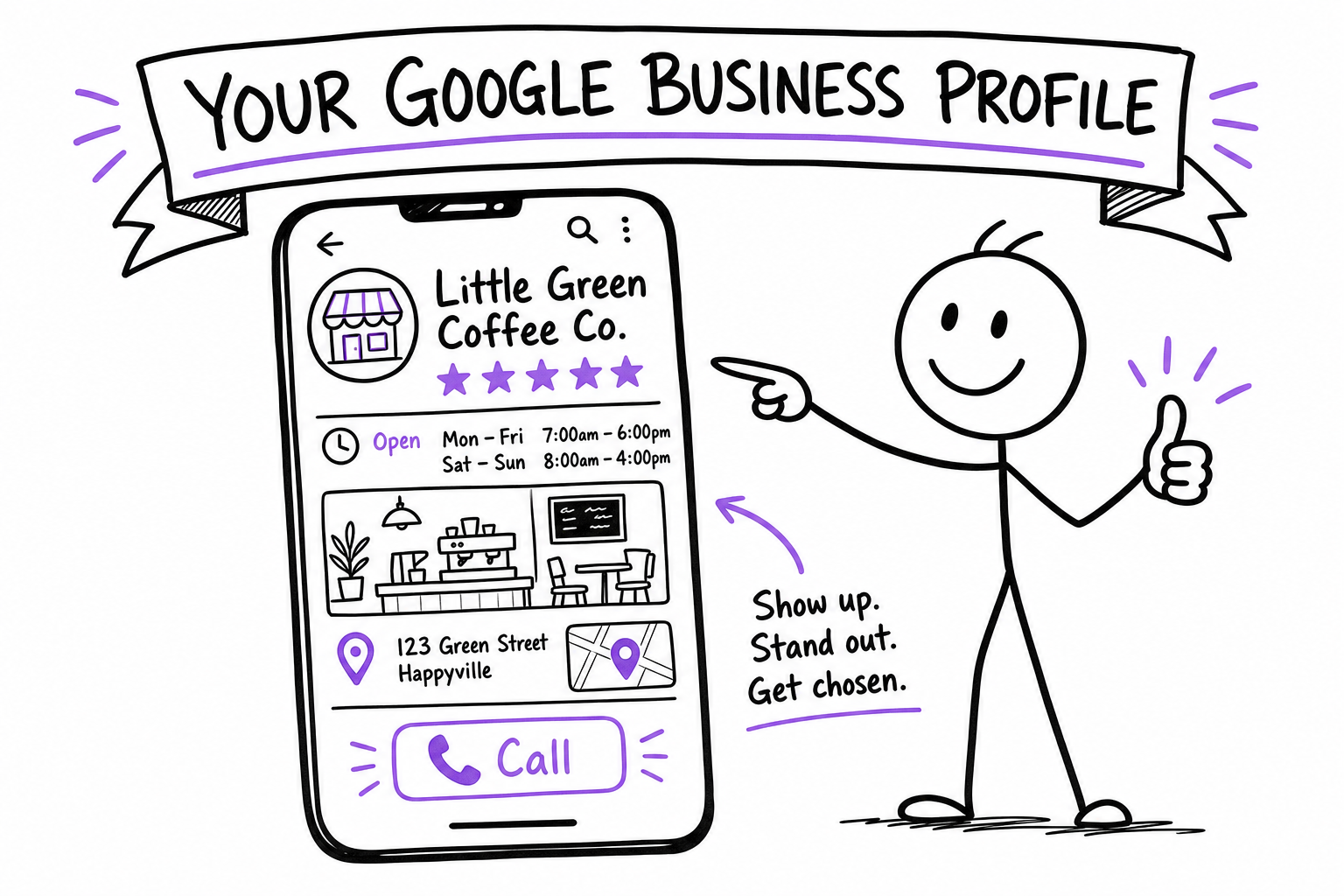
If you do one thing, do this. Your Google Business Profile is the free listing that puts you on Maps and in the map pack, and Google states plainly that "businesses with complete and accurate information are more likely to show up in local search results," while inaccurate info means you "might not show up for relevant searches in your area" (Google).
So, the basics that matter:
- Claim and verify your profile (it's free).
- Fill in everything — correct categories, services, hours, service areas, phone and website.
- Add real photos of your work, premises and team.
- Use Posts for offers and updates.
- Keep it accurate — wrong hours or an old number quietly cost you customers.
(This is the work we handle for clients — more on our SEO and local visibility page.)
Reviews are your single biggest lever
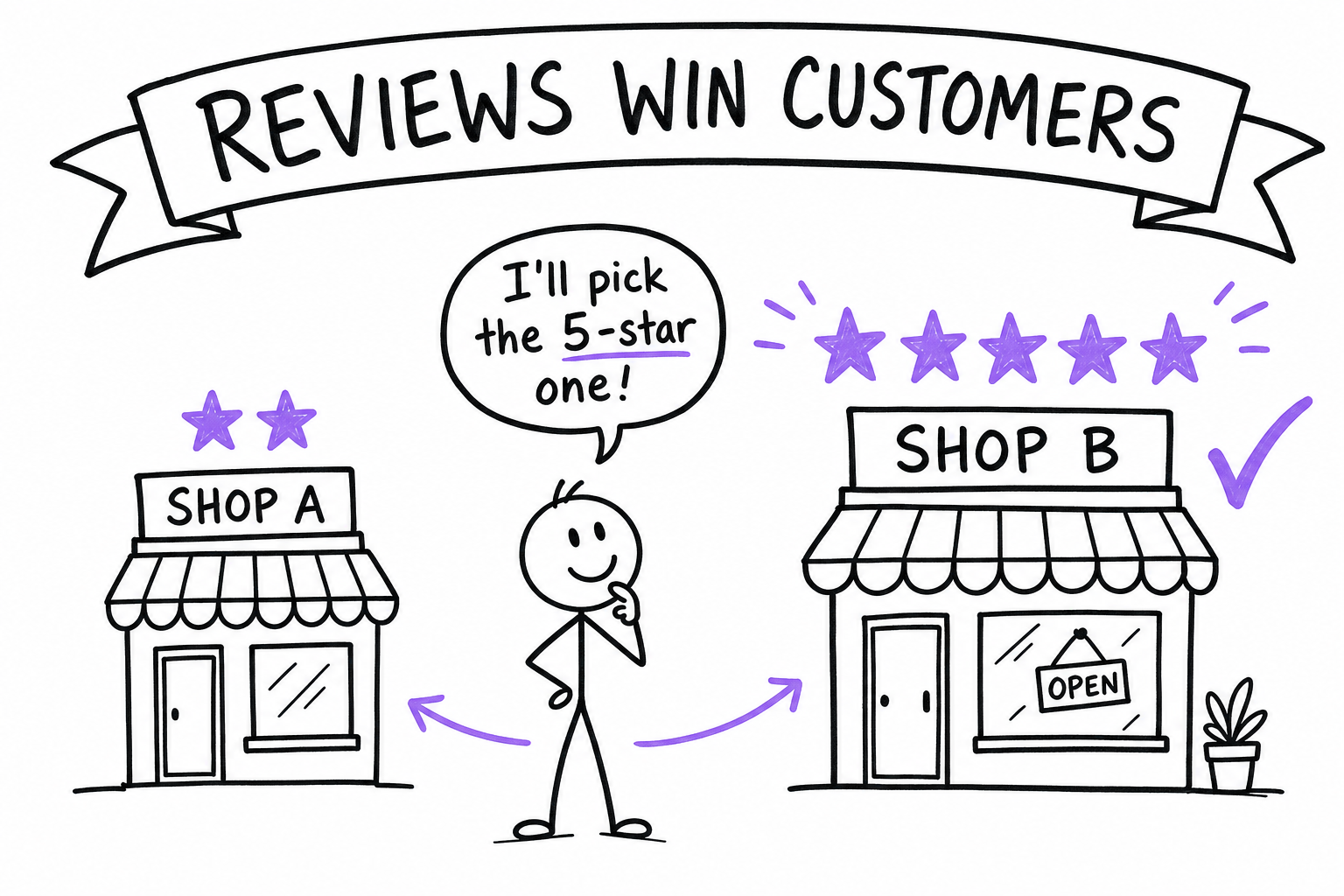
If the Business Profile is the foundation, reviews are the engine — for both ranking and winning the click. Google confirms that "more reviews and positive ratings can help your business's local ranking" (Google).
But the bigger story is how much reviews drive the customer's choice. Global consumer research from BrightLocal's 2026 Local Consumer Review Survey found that:
- 97% of consumers read reviews for local businesses.
- 85% say positive reviews make them more likely to use a business — and 77% say negative reviews make them less likely.
- 68% will only use a business rated 4 stars or higher (up from 55% the year before), and 31% now want 4.5+.
- 74% look for reviews written in the last three months.
Two takeaways for a South African owner: get a steady stream of fresh reviews (an old pile of five-stars isn't enough — people want recent ones), and respond to them, the good and the bad. It's the cheapest marketing you'll ever do.
Where the clicks actually go
It's tempting to obsess over being #1 on the map. Worth knowing: in an (older, US) BrightLocal click study from 2018, organic results took the single biggest share of local-search clicks — more than the map pack — and review ratings were the biggest single driver of which result people clicked.
The lesson holds even if the exact numbers are dated: you want to show up in both the map pack and the normal results, and strong reviews are what pull the click either way. That's why local SEO and a solid website work together, not separately.
Keep your details consistent everywhere (NAP)
"NAP" = Name, Address, Phone. Google leans on consistency to trust that your business is real and where you say it is. If your details differ across your website, Google profile, Facebook, and local directories (an old address here, a different phone there), it muddies the signal. Pick one exact format and use it everywhere.
Back it up with your website
Your Maps presence is stronger when a relevant website supports it:
- A page that clearly states what you do and where (your town/suburb in the words, naturally — not stuffed).
- Fast loading and mobile-friendly (most local searches happen on a phone).
- Your NAP and an embedded map.
- Easy ways to act — a tap-to-call button, a WhatsApp link, a booking or enquiry form.
How do you know it's working?
Track the things that mean money: calls, direction requests and website clicks from your Google Business Profile (it shows these for free), plus where you rank for your key "service + town" searches.
Not sure where you stand right now? Our free Google Visibility Checker gives you a quick read on how visible your business is on Google — a good 30-second starting point.
Where to start
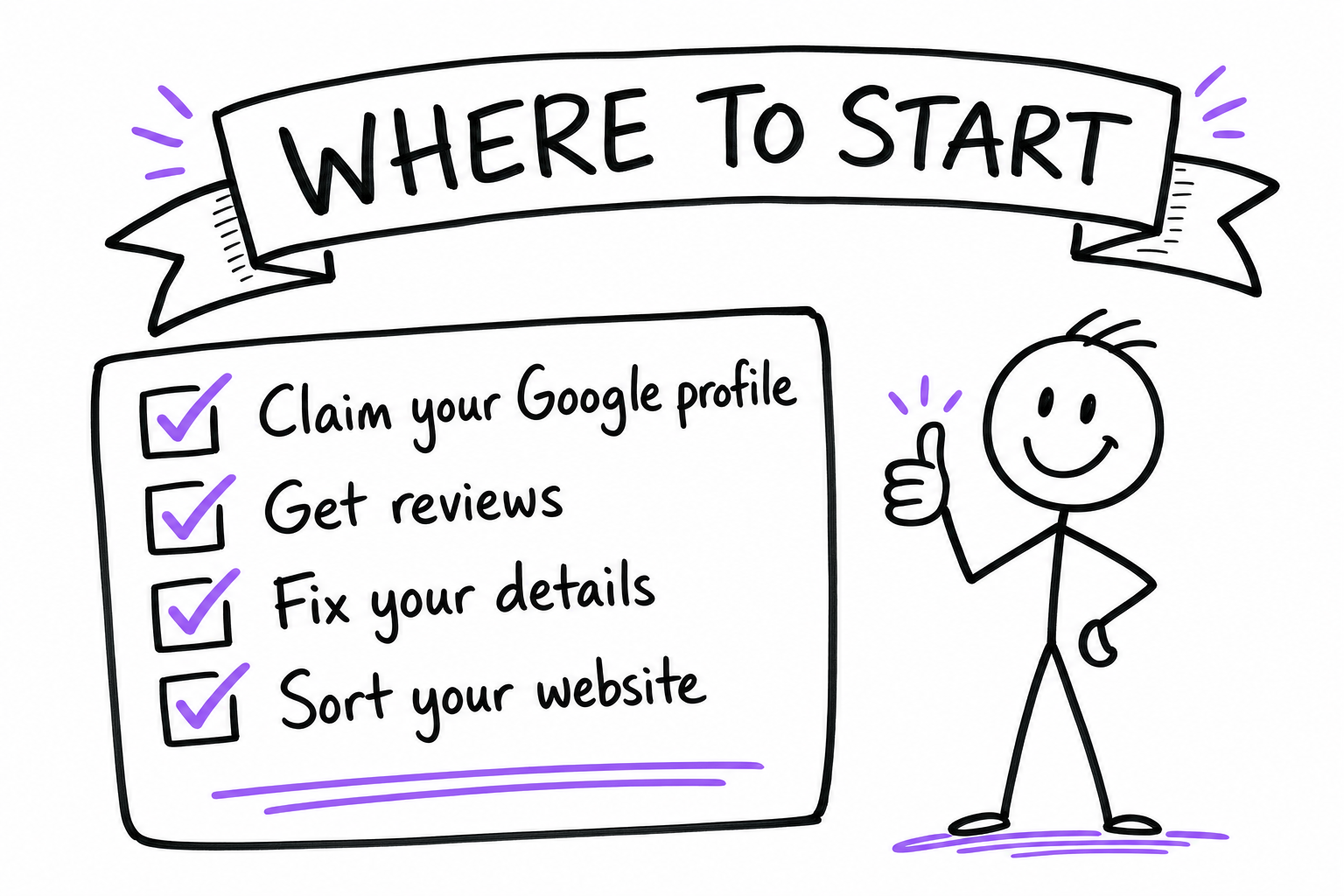
You don't need a big budget to win locally. In order:
- Claim and fully complete your Google Business Profile.
- Start getting reviews — ask every happy customer, every time.
- Fix your NAP so it's identical everywhere.
- Sort your website — clear, fast, mobile, easy to contact.
Do those four and you'll be ahead of most local competitors, who've done none of them.
Want to be the business locals find first?
We set up and optimise local SEO for South African small businesses — Google Business Profile, reviews, and a website that backs it up. Start with a free audit.
Frequently asked questions
What is local SEO?
It's the work that gets your business found by nearby customers — on Google Maps, in the local "map pack," and in "near me" searches. It centres on your Google Business Profile, your reviews, and a supporting website.
How long does local SEO take?
Google Business Profile improvements can show within a few weeks; broader local ranking usually builds over three to six months. It compounds — the longer you invest, the stronger and cheaper your visibility gets.
Do reviews really affect my ranking?
Yes. Google states that more reviews and positive ratings can help your local ranking — and they heavily influence which business a customer picks.
Do I need a website if I have a Google Business Profile?
You can rank without one, but a fast, relevant website strengthens your local ranking and gives customers somewhere to convert. The two work best together.