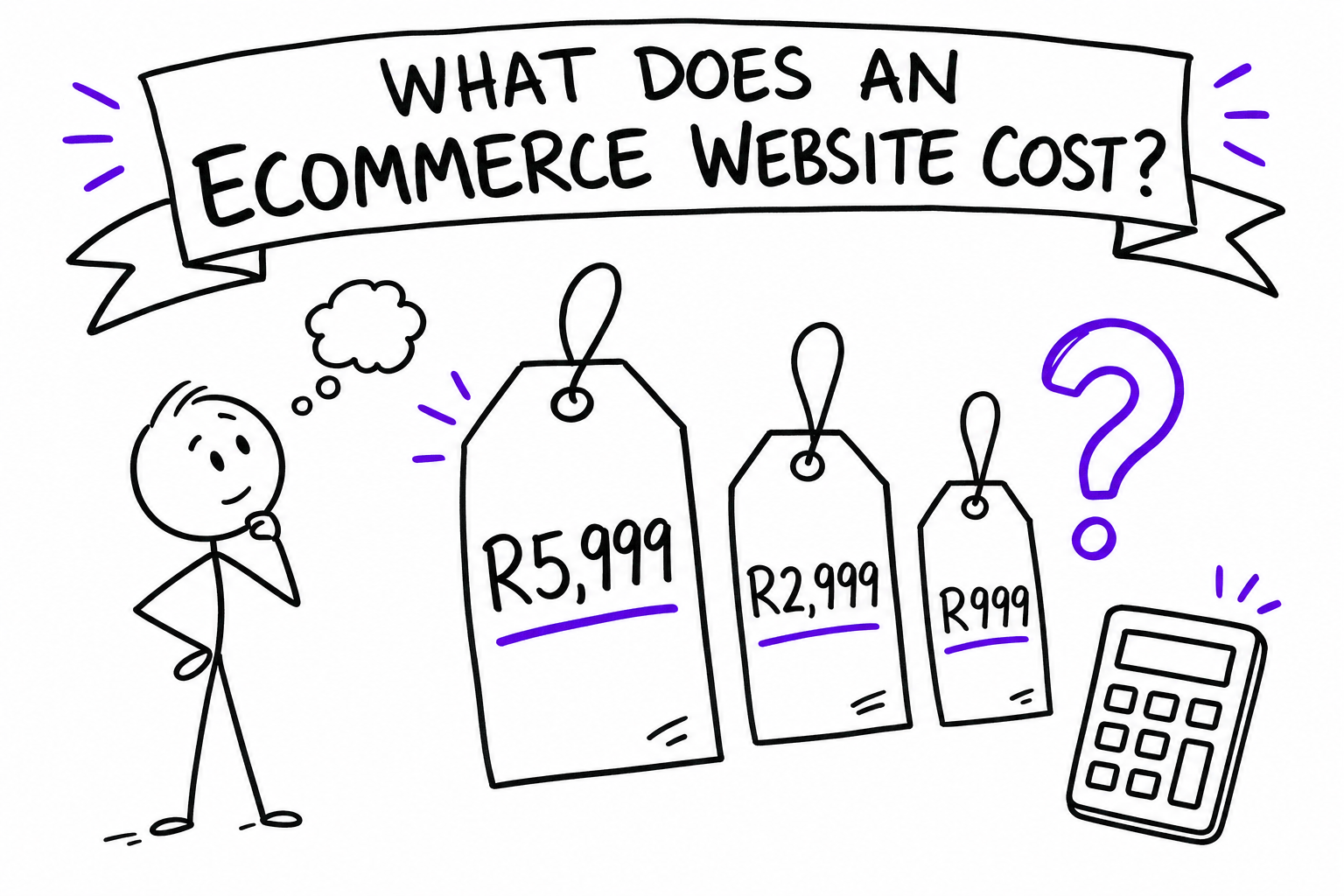
Short version: there isn't one number, because "ecommerce website" covers everything from a R0 DIY store to a R300,000 custom build. Once you add running costs, five honest tiers are: DIY (R0–R5,000), a freelancer build (R8,000–R30,000), a small agency (R15,000–R60,000), a bigger agency (R60,000–R200,000+), and a fully custom build (R100,000–R500,000+). Most South African small businesses land in the first two tiers. Below, we break down exactly what you're paying for at each level, and the hidden costs most guides don't mention.
If you've searched "ecommerce website cost South Africa" and found five different answers, you're not going mad. Every site quotes a different number because they're each answering a different question. Some quote the platform's monthly fee. Some quote what an agency charges to build it. Almost none show you both, plus the running costs, side by side.
So let's fix that. This guide breaks your total cost into three separate buckets — the platform, the build, and the running costs — so you can see exactly where your money goes and where you can genuinely save.
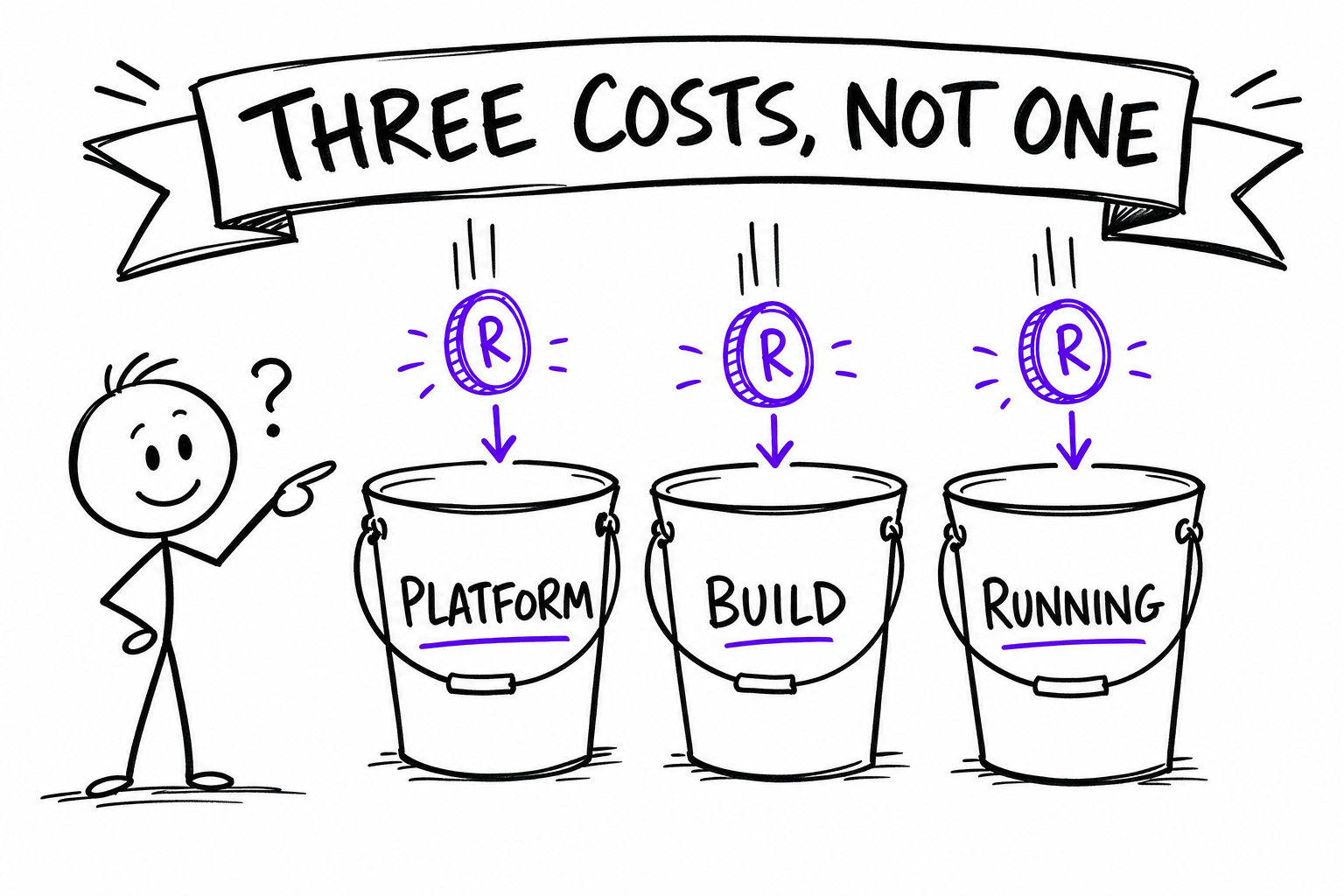
The three buckets that make up your total cost
Every quote you see online is really answering one of these three questions:
- What does the platform cost? (Shopify, WooCommerce, Wix — the software your store runs on)
- What does it cost to build? (the once-off design and setup, whether you do it yourself or pay someone)
- What does it cost to run? (payment gateway fees, apps, hosting, maintenance — every month, forever)
Get the platform wrong and you overpay every month for years. Get the build cost wrong and you either overpay upfront or end up with a store that breaks once you're busy. Miss the running costs and your "cheap" store quietly costs more than the expensive one once it's actually selling. So we'll walk through all three.
Bucket 1: what the platform costs
This is the monthly fee for the software itself — before you've paid anyone to build anything.
| Platform | Typical monthly cost | The South African catch |
|---|---|---|
| Shopify Basic | Roughly R470–R730/month (billed in US dollars, so it moves with the exchange rate) | Hosting is included, but Shopify Payments doesn't work in South Africa — more on this below |
| WooCommerce | R0 for the plugin itself | You pay for hosting separately: roughly R35–R600/month depending on quality |
| Wix (ecommerce plans) | Roughly R250–R450/month | Hosting included, and Wix charges no extra transaction fee on sales — genuinely simpler here |
| Squarespace Commerce | Roughly R750/month | Hosting included, no extra transaction fee |
Note on that Shopify range: two otherwise-reliable sources quoted R470 and R730 for the same Basic plan in the same month. That's not either source being wrong — it's because Shopify bills in US dollars, and the rand moved noticeably within July 2026 alone. Your Shopify subscription's rand cost can shift even when Shopify hasn't changed a single price.
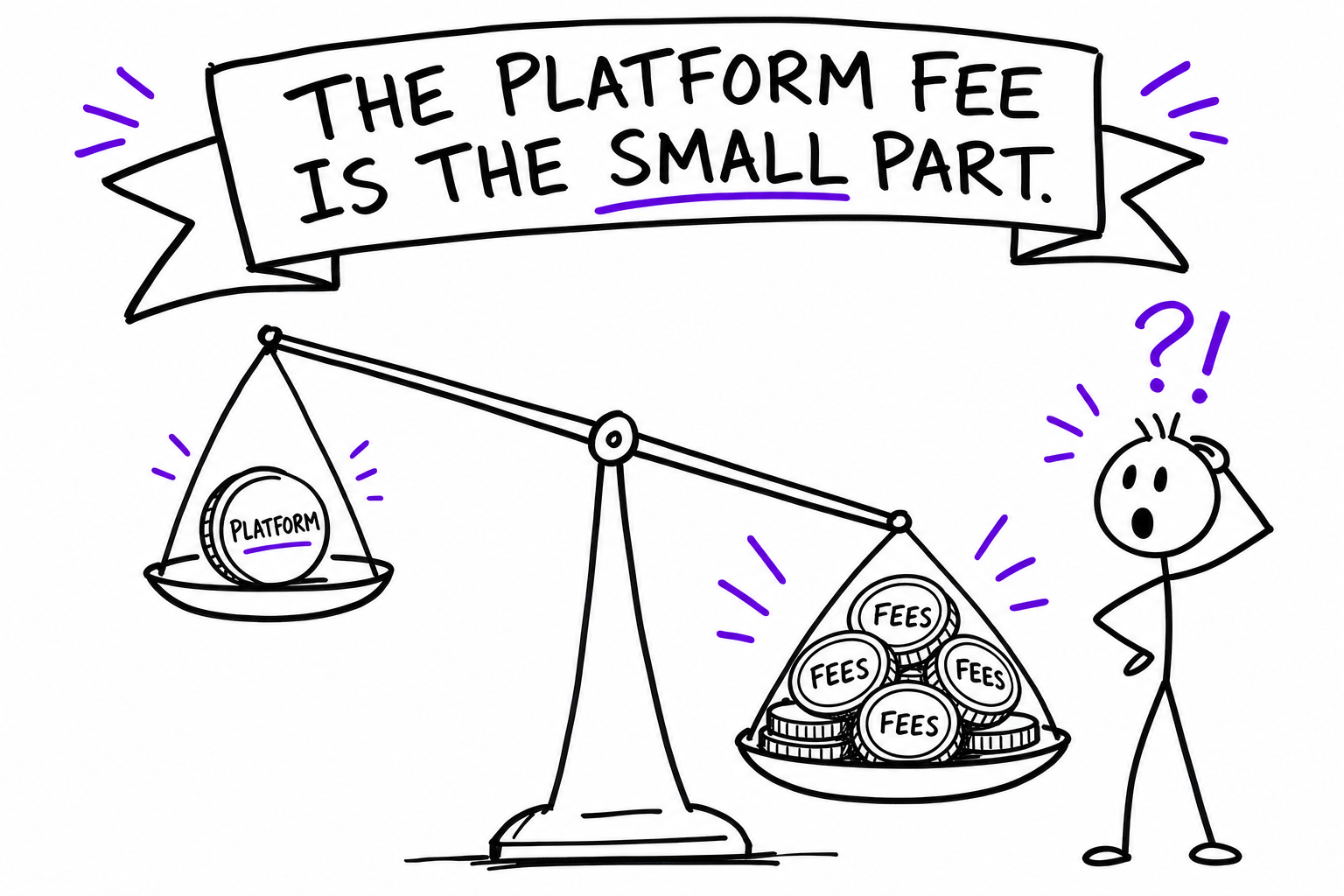
Looking at this table alone, WooCommerce looks cheapest and Shopify looks priciest. But this is only bucket one of three — and it's usually the smallest bucket, not the biggest.
Bucket 2: what it costs to build
This is the once-off cost of actually getting a working store live: design, product setup, payment integration, the lot. Here's where South African prices really land in 2026:
| Build tier | Typical cost | What you're actually getting |
|---|---|---|
| DIY | R0–R5,000 | You build it yourself on a template theme — free in rand, expensive in hours |
| Freelancer-built | R8,000–R30,000 | An individual developer or designer, usually template-based with some customisation |
| Small agency | R15,000–R60,000 | A small team, custom design, standard integrations |
| Larger/premium agency | R60,000–R200,000+ | Full custom design, advanced UX, multiple integrations |
| Fully custom development | R100,000–R500,000+ | Bespoke build, high product counts, enterprise features |
Where you land in that table mostly comes down to three things: how many products you're listing, how much custom design you want beyond a template, and how many other systems — accounting, stock, courier, email — need to talk to your store. A 15-product store with one payment gateway is a very different job to a 300-product store syncing stock with an accounting package.
For agency and freelancer rates specifically: expect roughly R250–R950 an hour depending on experience, with Cape Town agencies typically charging 10–20% more than the Joburg equivalent. A basic ecommerce build takes a minimum of around 100 hours, which is why the quotes above vary as much as they do — you're really paying for hours of work, not a flat "website fee."
Bucket 3: the running cost most guides leave out
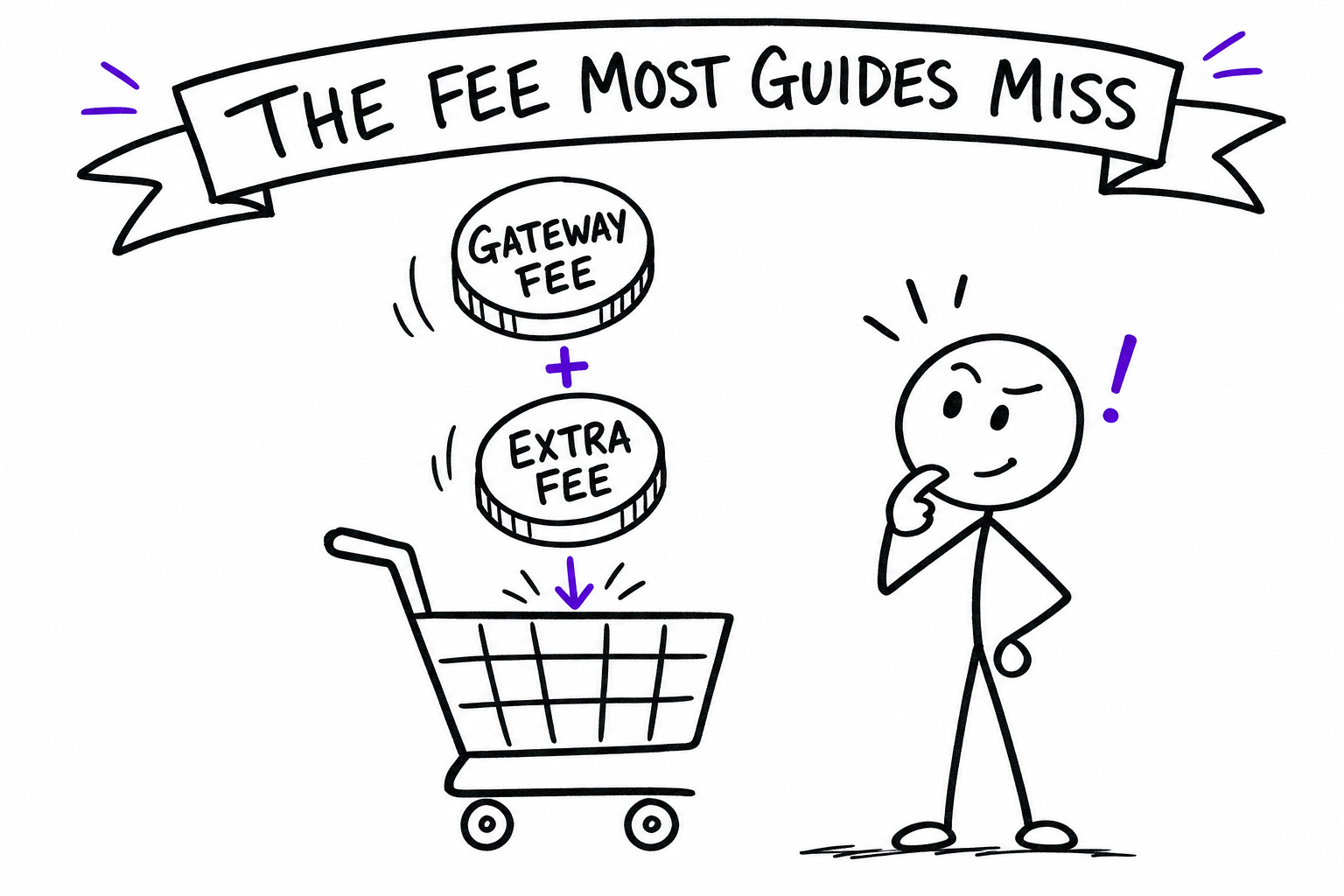
Here's the part that changes the whole picture once your store is actually making sales: Shopify Payments — Shopify's own built-in payment system — isn't available in South Africa. So every South African Shopify store has to connect a local payment gateway instead, and pay two fees on every single sale instead of one.
| Gateway | Typical fee | Best for |
|---|---|---|
| PayFast | Roughly 3.2% + R2 (cards); around 2% + R2 minimum for instant EFT | Widest range of local payment methods |
| Yoco | From around 2.7%, volume-discounted | Simplicity, and stores that also sell in person |
| Peach Payments | Roughly 2.95% + R1.50 | Growing stores, free daily settlement |
| Ozow | Roughly 2.85% cards, around 1.5% for instant EFT | Customers who prefer to avoid cards |
Now here's the catch specific to Shopify: on top of whichever gateway fee above you pay, Shopify adds its own extra fee for not using Shopify Payments — 2% on the Basic plan, 1% on Grow, 0.6% on Advanced. WooCommerce and Wix don't have this problem: you pick a gateway and pay only that gateway's fee, with no second fee stacked on top.
On a store doing R100,000 a month in sales, that stacked fee alone can add R4,700–R5,700 a month on Shopify — often more than the platform's subscription itself. It's the single most useful thing to understand before choosing a plan, because moving up a Shopify plan lowers this fee.
Two costs that move without you doing anything
VAT is currently 15%, and it's staying there. South Africa proposed VAT hikes to 15.5% and then 16% over 2025 and 2026, and both were reversed — the 2026 Budget confirmed the rate holds at 15%. Shopify's South African billing still charges 15% VAT on your subscription and transaction fees, so it's already baked into the numbers above.
The rand-dollar exchange rate is the real ongoing risk — but only if you're on Shopify. Because Shopify bills in US dollars, your subscription's rand cost moves with the exchange rate even when Shopify hasn't touched its prices. In July 2026 alone, the rate moved by around 3%. WooCommerce and Wix, which quote in rand, don't carry this particular risk. If you're budgeting for a Shopify store, build in a 10–15% buffer for exchange-rate movement over the year.
What actually pushes your price up
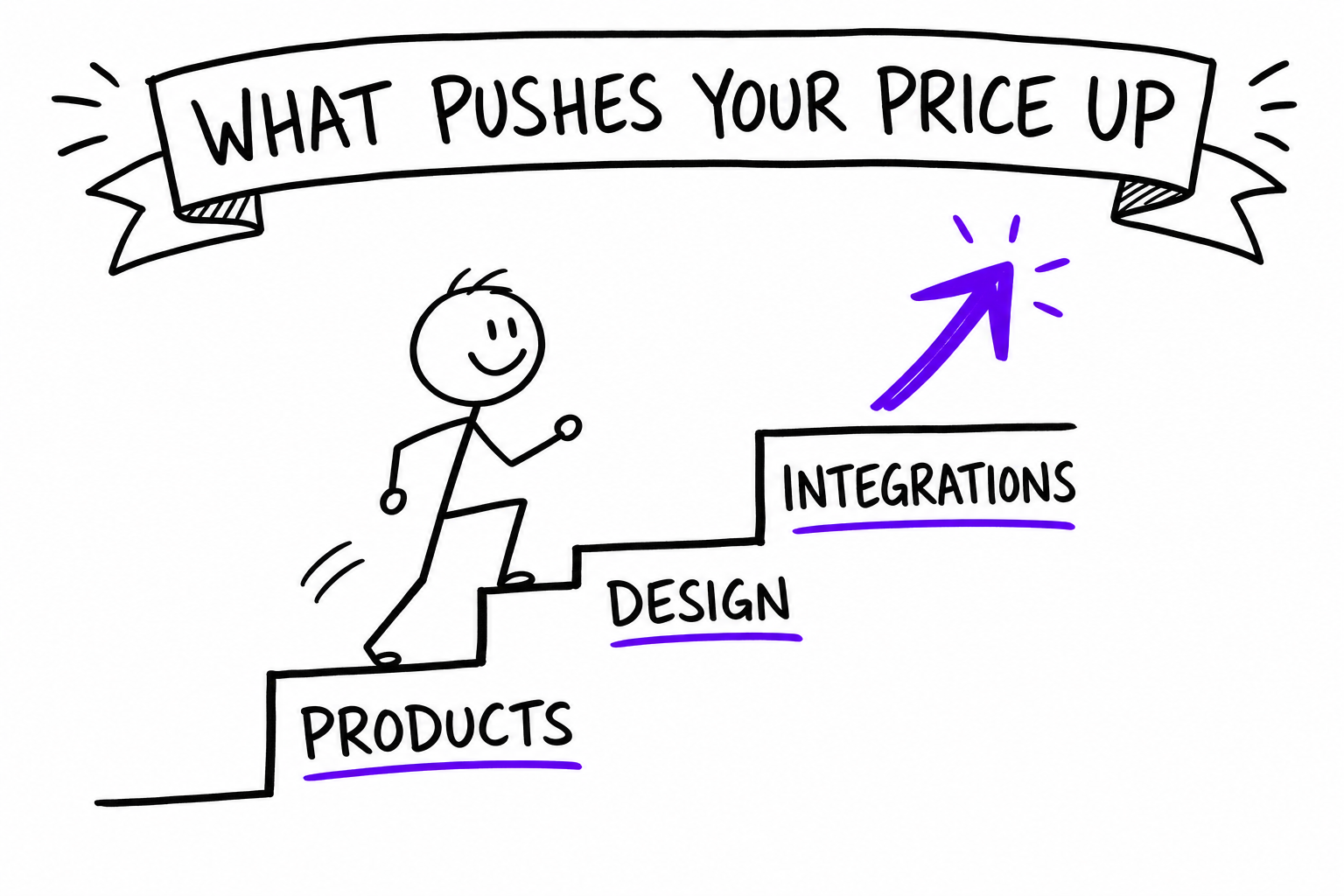
Across every tier, the same handful of things drive the cost from the bottom of a range to the top:
- Product count. 15 products with simple variants is a few hours' work. 300 products with sizes, colours and stock levels is a different job entirely.
- Custom design. A polished template theme is fast and cheap. A fully bespoke look, built from scratch, takes far more hours.
- Integrations. Every extra system you connect — accounting software, stock management, a specific courier, an email platform — adds setup time and often an ongoing app fee.
- Migrations. Moving an existing store's products, orders and customer history to a new platform is almost always more work than starting fresh.
- Product photography. Often forgotten in cost estimates, but a proper shoot runs roughly R3,000–R15,000 — and photos are what actually sell online.
A realistic first year, worked example
Here's roughly what a small South African store looks like across a full first year, at three different starting points:
| DIY/budget | Freelancer/professional | Premium agency | |
|---|---|---|---|
| Once-off build | R0 (your time) | ~R20,000 | ~R80,000 |
| Monthly running cost | ~R450 | ~R3,000–R5,000 | ~R10,000–R15,000 |
| Illustrative year 1 total | ~R5,400 | ~R49,000 | ~R150,000 |
These are illustrative, not a quote — your actual number depends on product count, platform, and how much of the setup you do yourself. But it shows the shape of the decision: the cheapest option on paper isn't always cheapest once you count your own hours, and the most expensive option isn't always overkill if it saves you from rebuilding in a year.
Where Intellium Inc's R5,999 build fits
We build done-for-you Shopify stores from R5,999 — a clean, conversion-ready store with local payment gateways and POPIA-compliant checkout set up correctly from day one, for up to around 30 products. That sits below the freelancer tier above and roughly level with a DIY build, without you spending the hours learning the platform yourself or working out which payment gateway to use.
Want an honest quote instead of a range?
Tell us roughly how many products you're selling and we'll tell you exactly what it'll cost — no surprises once you're live.
Quick answers
What's the cheapest way to get an ecommerce store online in South Africa?
A DIY Wix or Shopify store on a template theme, which can cost close to R0 upfront if you do the setup yourself — though it costs you hours instead of rand.
Why do Shopify prices in rand keep changing?
Shopify bills in US dollars, so your rand cost moves with the exchange rate even when Shopify hasn't changed a single price.
Is Shopify or WooCommerce cheaper in South Africa?
WooCommerce has no platform fee and no extra transaction surcharge, so it's often cheaper on paper — but you pay for your own hosting and need more technical know-how to run it.
How much do payment gateway fees actually cost me?
Expect roughly 2.7%–3.5% per sale from the gateway itself, plus an extra 0.6%–2% on top if you're on Shopify (this is the fee most guides miss).
Does VAT affect my ecommerce running costs?
Yes — South Africa's VAT is 15%, and it applies to your Shopify subscription and transaction fees. It's been proposed to rise twice since 2025 and reversed both times, so 15% is the number to plan around for now.
Ready to see your actual number?
Ready-to-sell Shopify stores for South African businesses, from R5,999.