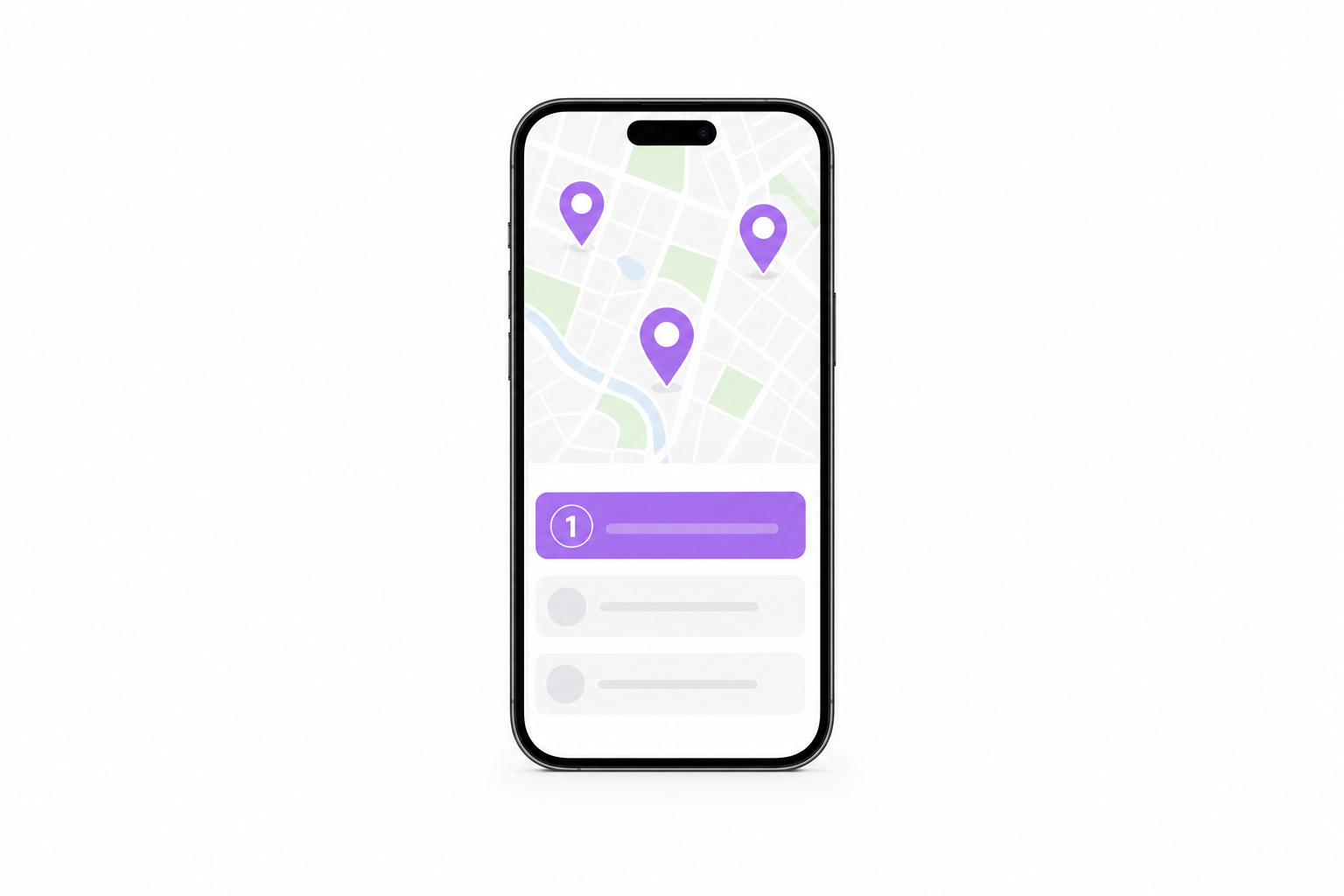
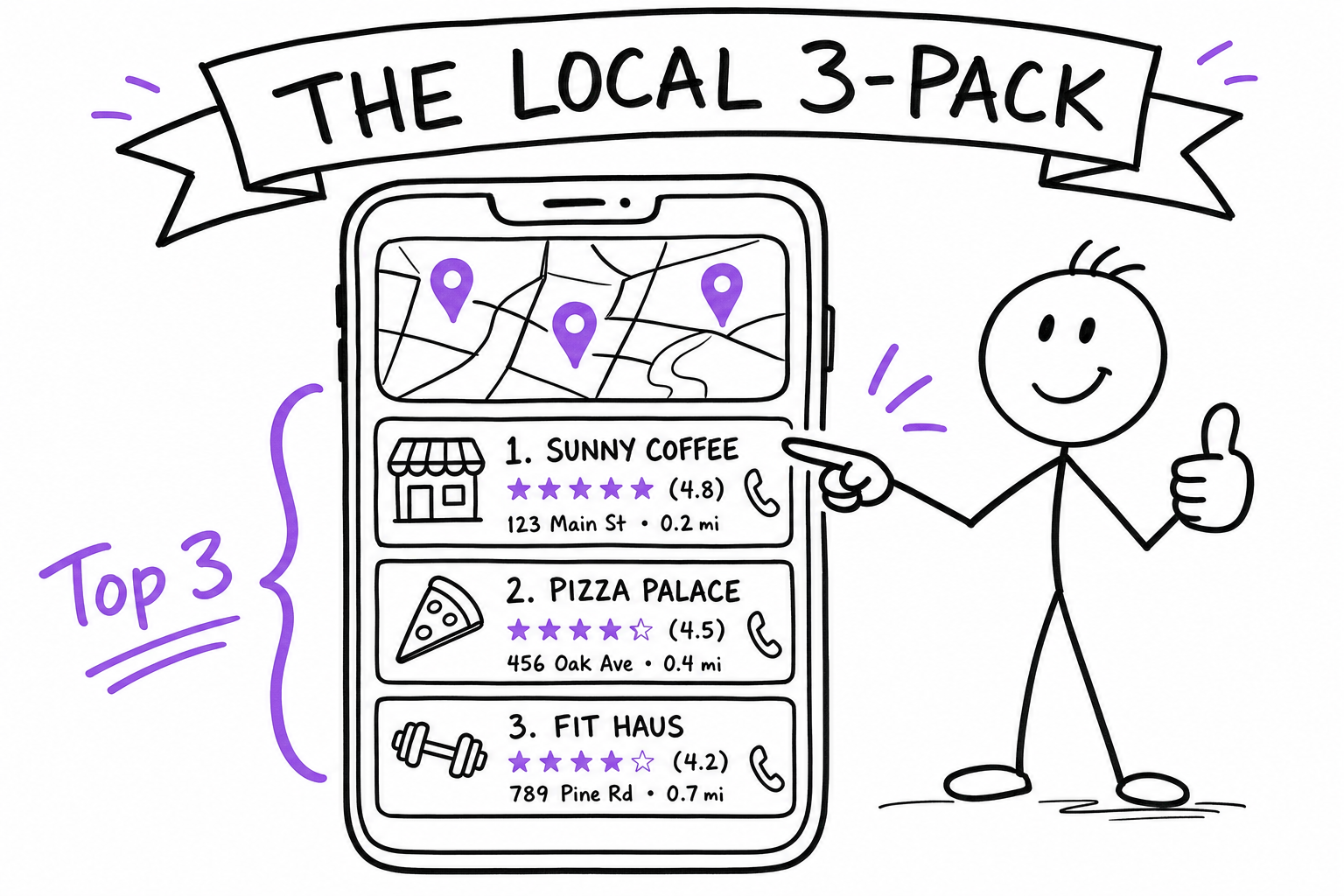
When someone in your area searches for what you sell, Google usually shows three businesses at the top of the map before anything else. That block is called the local 3-pack, and for a small South African business it is the most valuable spot on the page. Most of the clicks, calls, and directions go to those three.
This guide covers how Google decides who lands in the 3-pack, the levers that actually move your ranking, and the mistakes that quietly hold you back or get your listing suspended. It builds on our guide to local SEO for SA small businesses, so start there if you want the full picture first.
The short answer
To rank in the Google Maps 3-pack, choose the right primary category, complete and verify your Google Business Profile, keep your name, address and phone identical everywhere, and build a steady stream of Google reviews. Those are the levers Google weighs most heavily for local search, and they are almost entirely in your control.
What the 3-pack is, and why it matters in SA
Search "plumber near me" or "coffee in Somerset West" and you get a small map with three businesses under it. That is the 3-pack. Below it sit the ordinary blue-link results, but the map block is what most people look at first, especially on a phone.
This matters more in South Africa than most places, because Google holds roughly 93% of search here. Bing and the rest barely register. So for local visibility, Google Maps and your Google Business Profile are close to the whole game.
How Google ranks the 3-pack: relevance, distance, prominence
Google is open about the three things that decide local ranking:
- Relevance is how well your Business Profile matches what someone searched. A complete, accurate profile with the right category and details is easier for Google to match.
- Distance is how close you are to the person searching. You cannot change where you are, but you can set your service areas so Google knows where you operate.
- Prominence is how well-known and trusted your business is, both online and off. Reviews, links, and a strong website all feed into this.
Behind those three, Google uses hundreds of smaller signals, and the exact recipe is private. You also cannot pay Google for a better local ranking. So the smart move is to focus on the known levers below rather than chase tricks.
The levers that actually move your ranking
Local SEO experts, through surveys like Whitespark's annual Local Search Ranking Factors, agree on which levers carry the most weight:
- Your primary category is the single biggest one. It tells Google what you are. A bakery set to "Restaurant" will struggle to show for "bakery near me." Pick the most specific category that describes your main service, then add secondary categories for anything else you genuinely do.
- A complete, verified profile. Google states outright that businesses with complete and accurate information are more likely to show in local results. Fill in every field: address, phone, hours, website, services, attributes.
- Reviews. Quantity, rating, and how recent they are together make up roughly a fifth of local ranking weight. More on this below, because it is the lever you control most directly.
- Consistent NAP. Your Name, Address, and Phone should match exactly everywhere they appear online. Inconsistent details make Google less sure about you.
- Your website. Local rankings and ordinary SEO are connected. Put your exact address and phone on your site, add your city to your titles and content, and keep the site fast on mobile.
- Local links and citations. A mention or link from a local directory, a community site, or a local newspaper builds prominence. In SA that means listings on the likes of Yellow Pages, Brabys, Snupit, and Hellopeter, kept consistent.
- Engagement. Clicks, calls, and direction requests appear to feed back into ranking. A profile with good photos and fresh posts earns more of those actions.
One thing that does not help: stuffing keywords into your business description or review replies. Google treats that as noise now.
Reviews: the biggest lever you control
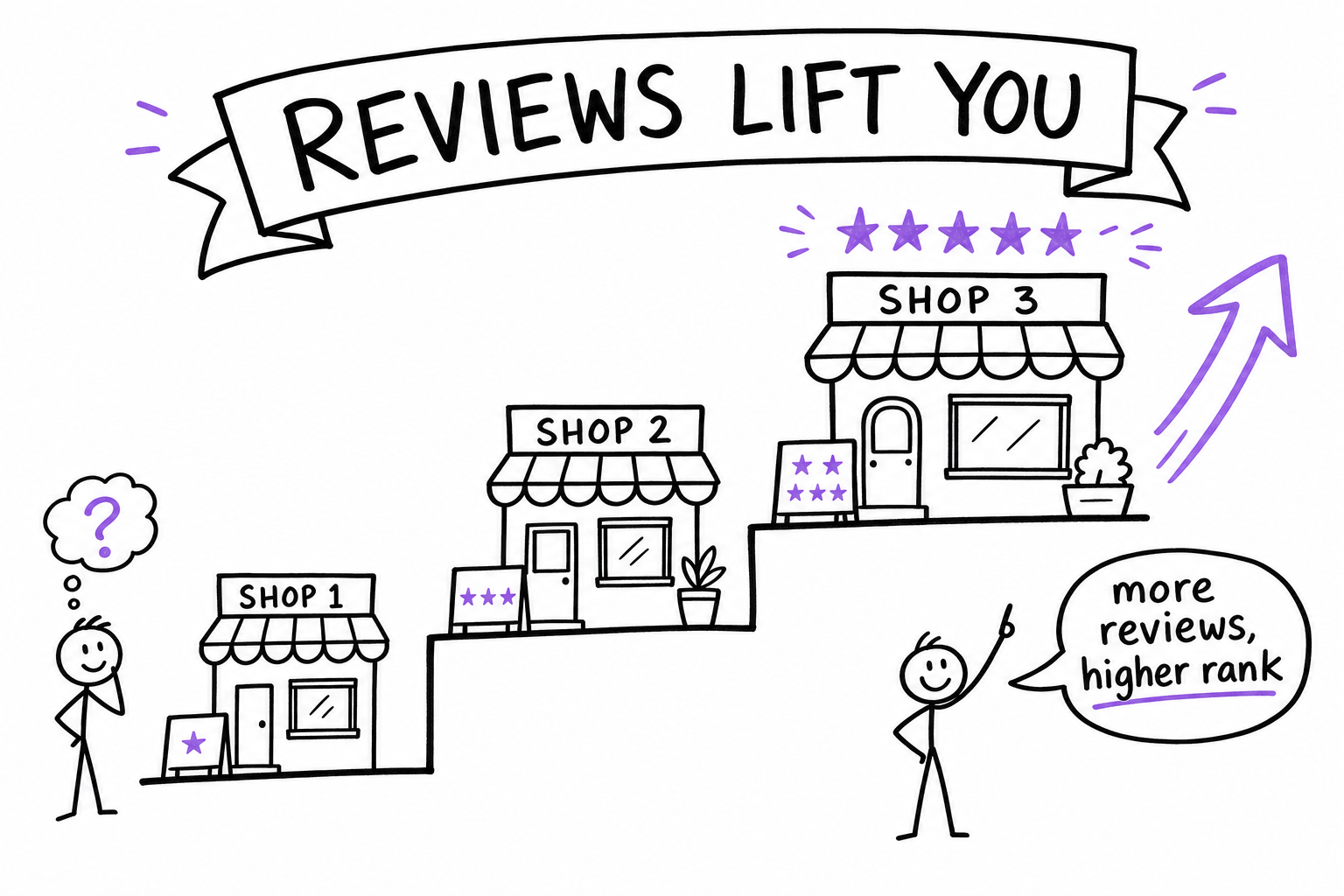
Reviews pull double duty. They lift your ranking, and they decide whether someone picks you once you are in the 3-pack.
On ranking, a business with 50 reviews at 4.7 stars will usually outrank a similar one with 5 reviews at 4.0. On choice, the numbers are stark: around 77% of consumers regularly read reviews before choosing a local business, and only about 3% would consider a business rated under 2 stars. Most people want to see 4 stars and up, backed by a decent number of recent reviews.
A few things that work:
- Ask, every time. Right after a good job, ask the customer for a Google review and send them your review link (you will find it in your profile dashboard). A QR code or a WhatsApp message works well in SA.
- Aim for a steady trickle, not one big push a year. A business that earns a few new reviews every month looks alive; one that got 20 reviews two years ago and nothing since does not.
- Reply to all of them, good and bad. Around 89% of consumers say they are likely to use a business that responds to every review. Thank people for the good ones, and answer the bad ones calmly and helpfully. Your reply is for the next customer reading it, not just the reviewer.
- Never buy reviews or filter out unhappy customers. Google removed over 170 million fake reviews in a single year and is getting better at it. A profile of obviously-fake five-stars is worth less than an honest 4.7.
Mistakes that hurt your Google Maps ranking
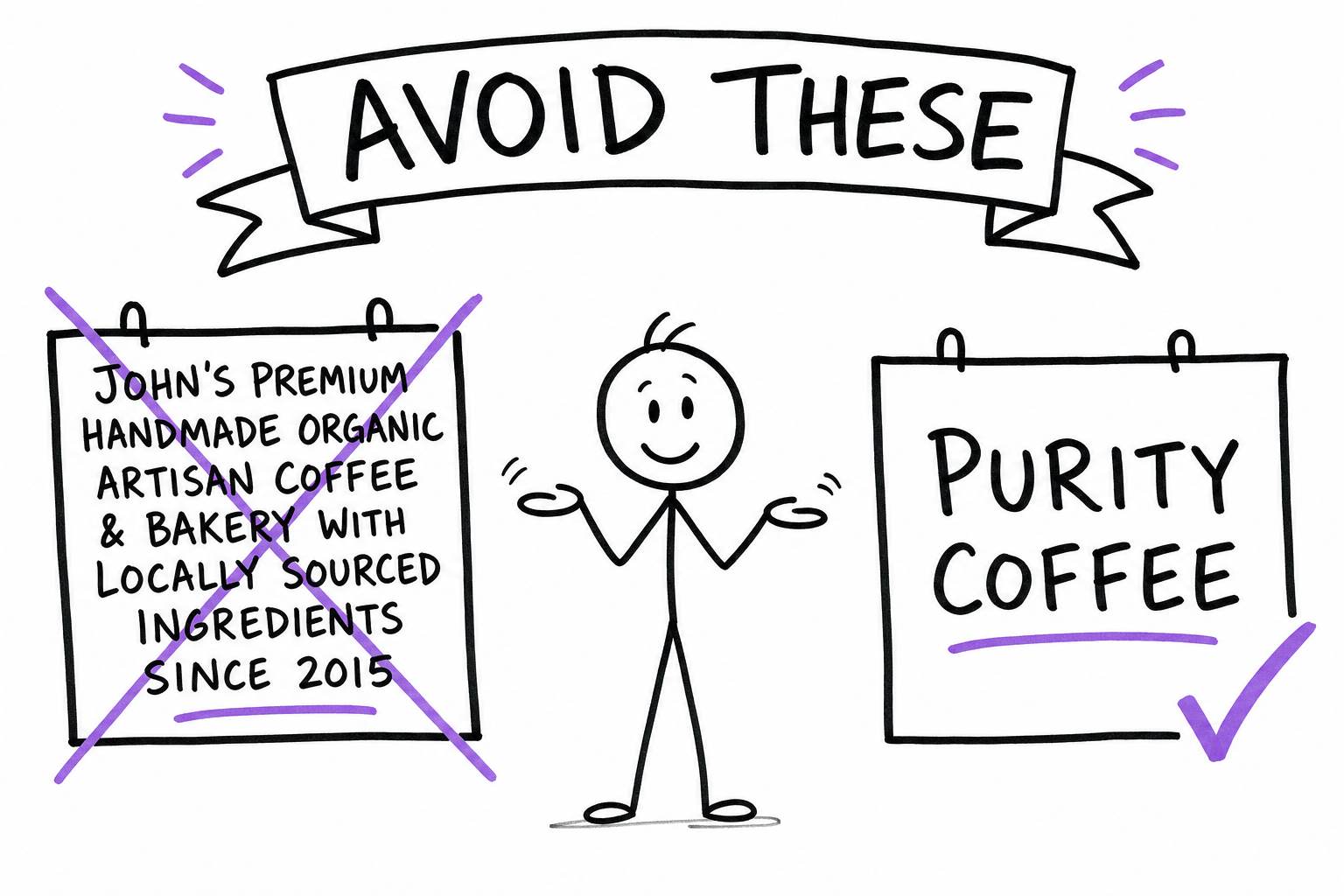
- Keyword-stuffing your business name. Calling yourself "Joe's Plumbing 24/7 Affordable Emergency Plumber Johannesburg" on Google breaks the rules. Since Google's Vicinity update, stuffed names get demoted, and yours can be suspended if reported. Use your actual business name.
- The wrong category. Setting an inaccurate primary category is one of the fastest ways to disappear from the searches you want. Fix it and you can see your ranking shift within a few weeks.
- Inconsistent NAP. "123 Main St" on one site and "123 Main Street, Unit 2" on another dilutes trust. Audit your listings and make them match.
- Fake addresses or duplicate listings. A pin dropped in a suburb where you do not operate, or two listings for one business, both invite a suspension. One honest listing per location.
A few South Africa specifics
- Service-area businesses. If you work from home or on the road, you do not need a public street address. Choose the "I deliver to my customers" option, hide your address, and set the areas you serve (say Soweto and the surrounding Johannesburg suburbs). Home-based and mobile businesses can still rank without a storefront.
- Local directories. Being listed consistently on SA directories and review sites like Hellopeter builds your citations and gives customers another place to find you.
- Language. Most urban searches happen in English, but if you serve Afrikaans, Zulu, or Xhosa-speaking customers, a bit of content in those languages can set you apart. Also cover the words locals actually use ("breakdown service" as well as "towing").
Local SEO is not fast, but it is one of the highest-return things a small business can do, and competition online is still thinner here than in bigger markets. Get your category right, keep your details consistent, and build a steady stream of reviews, and Google's local algorithm tends to reward you. The foundation under all of it is the profile itself, which our guide to setting up and optimising your Google Business Profile walks through step by step.
Want to know how visible your business is right now?
We set up and optimise local SEO for South African small businesses — Google Business Profile, reviews, and a website that backs it up. Start with a free audit.
Frequently asked questions
What is the Google Maps 3-pack?
It's the block of three businesses Google shows at the top of the map for a local search like "electrician near me." Those three spots get most of the clicks and calls, so ranking there is the goal of local SEO.
How do I rank higher on Google Maps?
Set the right primary category, complete and verify your Google Business Profile, keep your name, address and phone identical everywhere, and steadily gather Google reviews. A fast, relevant website with your city and address on it supports all of that.
Do reviews affect my Google Maps ranking?
Yes. Review quantity, rating and recency make up roughly a fifth of local ranking weight, and they heavily influence which of the three businesses a customer actually picks.
How long does it take to rank on Google Maps?
Profile fixes like the right category can show within a few weeks. Building genuine local ranking usually takes three to six months, and it compounds the longer you keep at it.
Can I pay Google to rank higher in the local pack?
No. You cannot pay for a better organic local ranking. You can run Google Ads, which show separately as "Sponsored," but the 3-pack itself is earned through the levers above.